Why Finding a Truly Good Restaurant in Japan Is Difficult, and How LocalWays Helps Close the Gap
Japan is often described as a country where almost any restaurant is good. In practice, visitors and foreign residents face a large information gap between what locals use to choose restaurants and what is visible in global platforms. This article examines that gap and the role LocalWays aims to play.
People living in Japan are frequently asked a familiar question: “Where should I eat in Tokyo?” On the surface, this sounds simple. Japan has a dense restaurant ecosystem, high overall quality, and extensive online information. Yet the reality is that the tools and cultural assumptions locals use to choose restaurants are very different from those used by most visitors.
How Locals Actually Choose Restaurants
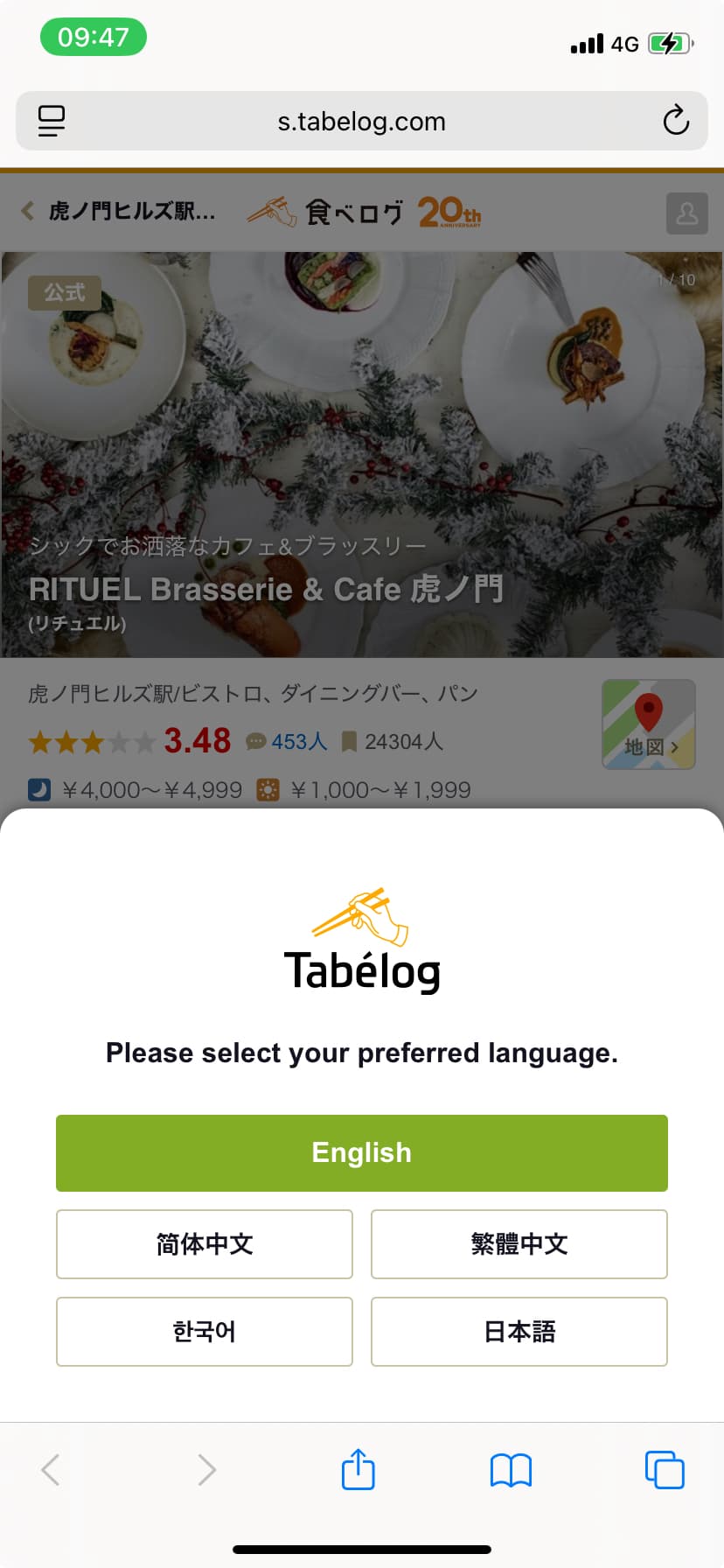
For many people in Japan, the default starting point is Tabelog, a domestic restaurant review platform that has become a central part of local dining culture. Ratings, written reviews, photos, and price ranges are not just data points. Over time, users develop an intuitive sense for how to interpret them: what a certain score implies, how to read between the lines of a review, and how to weigh volume of reviews against score.
Visitors from abroad, however, typically rely on Google Maps or Yelp. These platforms follow different rating cultures and attract different user bases. As a result, the same restaurant can have very different perceived value depending on which platform is being used and which language community is looking at it.
Rating Culture and Score Interpretation
Cultural attitudes toward self-evaluation and praise influence how people use rating scales. In Japan, there is a general tendency to avoid giving the maximum rating, whether one is evaluating oneself or a restaurant. This restraint is visible in Tabelog scores. A score in the mid 3s can already indicate a solid restaurant, and anything above 4 is exceptional.
On Google Reviews, by contrast, users in many countries award five-star ratings more readily for satisfactory experiences. This effectively shifts the baseline upward. Someone used to Google's distribution might consider 4.5 the threshold for “good,” while on Tabelog, 3.5 can represent a similar level of local endorsement. Without understanding these different baselines, visitors may dismiss high-quality local choices that do not appear impressive on a numerical scale alone.
The written reviews require similar interpretation. In some cases, criticism is expressed in indirect language. In others, long-time regulars write with an implicit understanding of the restaurant's history and style. When these nuances are translated or viewed without cultural context, important signals can be lost.
The Influence and Limitations of Social Media
Short video platforms and image-centric social networks have changed how restaurants are discovered. TikTok and Instagram make it easy to share the look and atmosphere of a place without any shared language. A single post can draw large numbers of visitors to a specific shop.
At the same time, social media introduces its own biases. Content tends to cluster around areas that are easy to film and easy to reach: Shibuya, Shinjuku, Harajuku, Asakusa, and similar districts. Shops that handle foreign guests regularly and offer English menus are more likely to appear in international feeds than small local establishments.
There is also the question of incentives. Some posts are sponsored or part of marketing campaigns. Others reflect a first-time visitor's experience rather than long-term consistency. These patterns do not make social media useless, but they do limit its reliability as a sole guide to everyday dining in Japan.
Everyday Local Restaurants That Remain Invisible
Many of the restaurants that local residents rely on are located in residential neighborhoods, a short walk away from main stations. They may have only a Japanese signboard, accept reservations exclusively by phone, and focus on repeat customers rather than tourists. These places form the backbone of local food culture, yet they often remain invisible in global search and recommendation systems.
For visitors and new residents, this invisibility creates a practical limitation. Even in a city with thousands of strong options, the choices that surface first are often those optimized for visibility rather than for representing the full range of what is available.
What LocalWays Aims to Do
LocalWays was created to address this gap in a practical way. Rather than asking users to craft keyword searches, it encourages them to describe their situation in natural language. For example: “Near Shinjuku, 19 people including children, not too noisy, vegetarian options available.”
The system then draws on multiple sources, including HotPepper, Tabelog via the Yahoo Local Search API and Google Maps. It aggregates this information and presents candidates in a format that is easier to act on than raw search results. The goal is not to replace existing platforms, but to interpret them on behalf of the user.
LocalWays supports multiple languages, including Japanese, English and Arabic, so that users can ask questions in the language in which they think most clearly.
On Limitations and Transparency
It is important to be explicit about what LocalWays cannot do. It cannot guarantee that a suggestion will be perfect for every individual. Taste is subjective, restaurant conditions change, and no system can capture every shift in real time. Local intuition built over years of living in a neighborhood still has unique value.
What LocalWays can do is narrow the gap between what is visible in public data and what is useful for a specific person in a specific situation. It does this by interpreting natural language, combining multiple data sources and avoiding fabrication. The service does not invent restaurants, reviews or false “hidden-gem” narratives. Its role is closer to translation and summarization than to promotion.
Conclusion: Getting Closer to a Local Friend
People who have friends in Japan can simply ask them where to go. LocalWays is an attempt to provide something similar for those who do not have that option. It cannot fully replace the insight of someone who lives in a neighborhood, but it can reduce the information asymmetry that many visitors and foreign residents face.
In that sense, LocalWays is not positioned as a new rating platform or a social network. It is intended as a layer that interprets existing information and brings people one step closer to the kind of context-aware recommendations they would receive from someone who actually lives here.
Note: LocalWays is an AI assistant developed to help users navigate Japan's restaurant landscape across languages and data sources. For media, partnership or product inquiries, please contact info@localways.shop.